

The 2026 midterm elections are approaching a decisive stretch, but the most useful way to follow them is not to treat every national headline as a forecast. Control of Congress will emerge from individual contests with different candidates, electorates, and local circumstances. For readers following Kamala Harris and the Democratic Party, that distinction is essential.
What is at stake in November 2026?
The congressional elections are scheduled for November 3, 2026. All 435 House seats are contested, while Senate elections cover a portion of that chamber. The presidency is not on this ballot. Ballotpedia’s congressional election guide provides the election date; USA.gov explains the congressional cycle.
House members serve two-year terms, so every district has a contest in a midterm year. Senators serve six-year terms, with their elections staggered. This produces two different maps: the House is a nationwide collection of district races, while the Senate contest depends on the states voting in that particular cycle. A favorable national environment therefore does not translate automatically into the same result in both chambers.
September reporting points to a concentrated House contest
Reuters reported on September 7 that roughly 50 House races were considered competitive. Its overview identified battlegrounds across several states and described redistricting as one factor changing the map. That is a report about the competitive landscape, not a declaration of winners. Read Reuters’ House race overview.
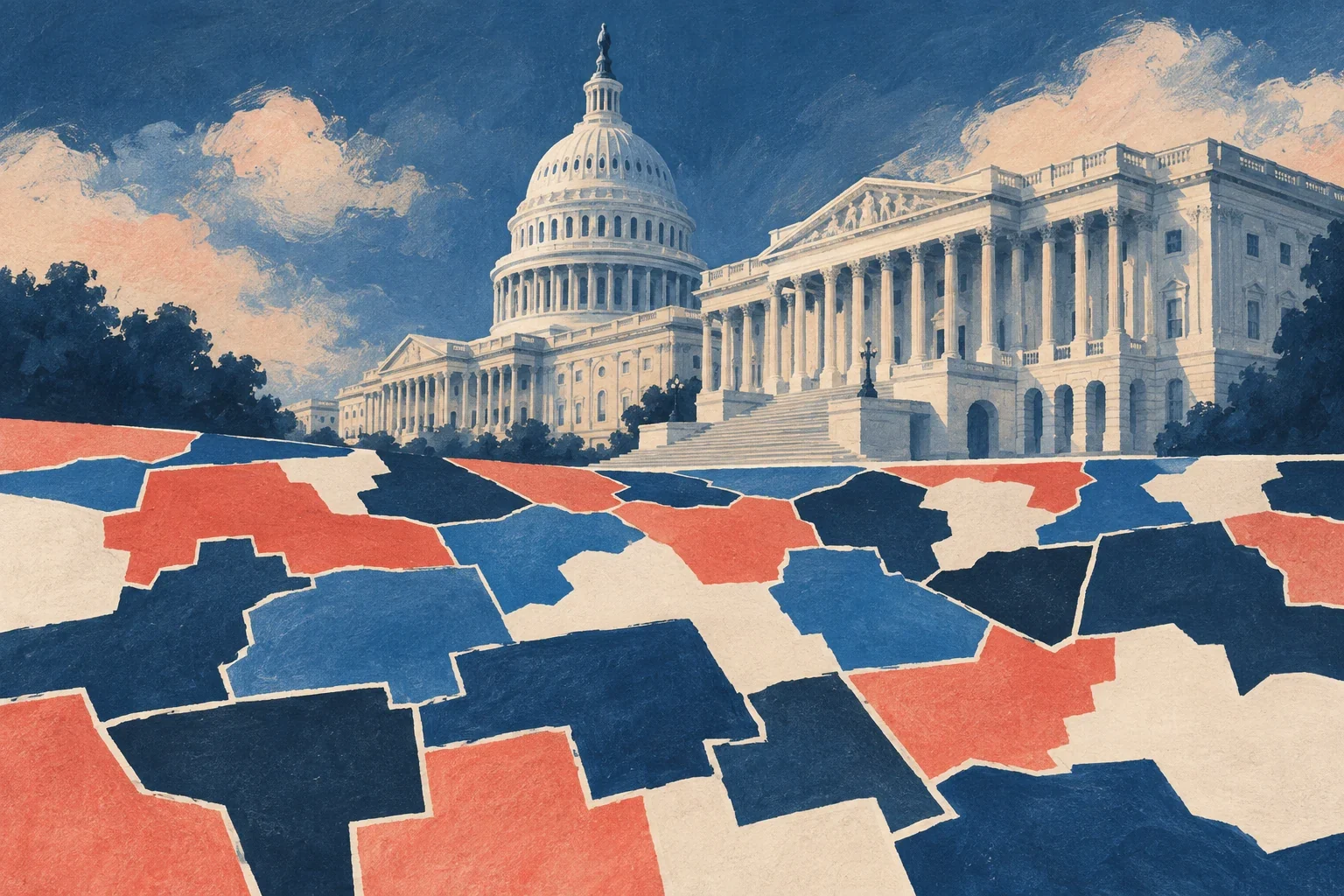
KHive Next analysis: the practical implication is that a national political story and a district-level story can both be true without being identical. A party can gain attention nationally while one of its candidates struggles locally. Conversely, a candidate with a distinctive record may compete effectively even when national headlines are unfavorable to the party.
The Senate requires a separate reading
Reuters’ September 7 Senate overview focused on nine competitive races, including North Carolina, Michigan, Texas, Maine, Georgia, Ohio, and New Hampshire. The article describes a different set of contests from the House map. Read Reuters’ Senate race overview.
A seat rating or a reported lead is a snapshot. It should be read with its date, underlying evidence, and uncertainty intact. Combining several snapshots into a confident national prediction can hide more than it reveals. In particular, a lead in one state does not establish the direction of another state, even when both races appear in the same election roundup.
Where does Kamala Harris fit into the midterm story?
Harris remains a subject of interest to readers thinking about the Democratic Party’s future. Reuters reported in April that she expressed openness to another presidential run. That report concerns 2028 possibilities, not the outcome of the 2026 congressional elections. See Reuters’ April 10 report.
This article does not claim a newly announced Harris campaign itinerary or endorsement. Her potential future plans and the immediate congressional contests require separate evidence. A responsible account of any appearance should identify the candidate involved, the place, the date, and what Harris actually said before drawing conclusions about its significance.
What KHive Next will look for in election coverage
Our analytical focus is on evidence that helps readers understand a race: candidate positions, the current district or state context, the source and date of polling, and what remains unsettled. A large rally, a fundraising announcement, and a survey measure different things. None should be substituted for an election result.
The same discipline applies to policy claims. When a candidate promises a change, readers should ask which office has the relevant authority and what additional action would be necessary. Congressional elections matter to the composition of the legislature, but no single campaign statement is equivalent to an enacted measure.
Keep the news and the forecast separate
The clearest reading of September’s coverage is that the map contains multiple contests worth following, with uncertainty still ahead. This is a reason to examine the details rather than to present a preferred outcome as inevitable. Our role as an independent fan community is to make those details easier to inspect.
Explore the policy discussions, browse Her Story, or bring a source and a question to the community.
Sources and publication note
Published September 8, 2026. This independent KHive Next analysis draws on the linked election explainers and September 7 reporting. It is not an official campaign message, a poll, or a prediction model. Registration deadlines and voting arrangements vary; consult your election authority for current local information.