
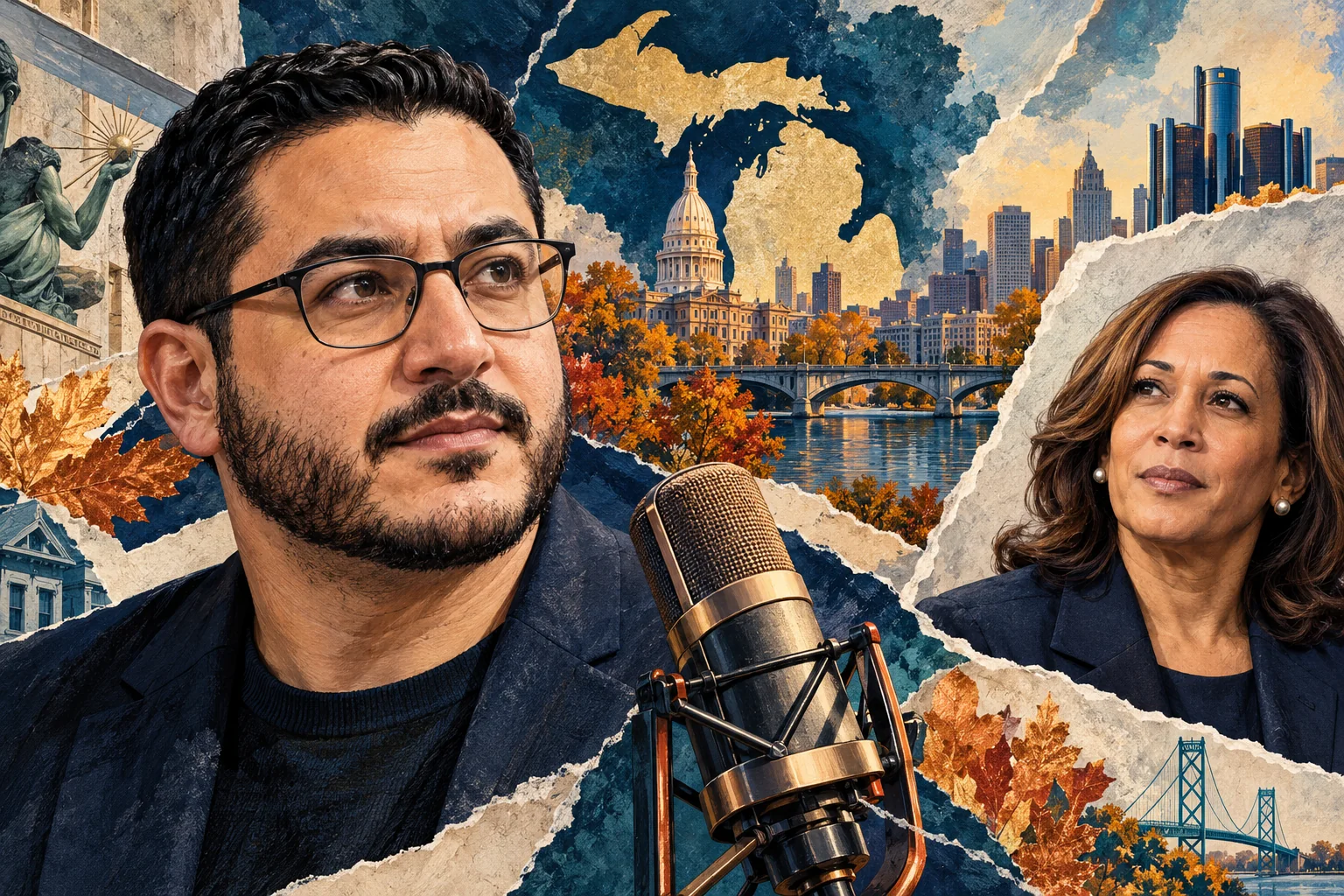
Abdul El-Sayed used an October 11 NBC interview to argue that Democrats need decisive midterm victories while answering questions about his own earlier statements. For readers following Kamala Harris's role in the 2026 elections, the news is a fresh examination of a Michigan Senate candidate she has supported—not a new interview or announcement by Harris.
NBC's published Meet the Press episode listing identifies the discussion as a full interview with El-Sayed and highlights his call to win by “massive numbers.” The episode was published October 11. This article, published October 12, separates what was newly reported from the earlier campaign relationships that explain its relevance.
What El-Sayed said about the election
According to iHeartRadio's October 11 account of the interview, El-Sayed connected his call for large Democratic victories to concern that Donald Trump could reject unfavorable election outcomes, as he did after the 2020 election. The comment describes the candidate's political argument and concern about public acceptance of results; it does not establish that any 2026 result has been compromised.
That distinction matters before voting is complete. A candidate can argue that a clear margin would make an outcome harder to dispute politically. Whether ballots are valid and accurately counted is a separate question, resolved through election administration and the applicable review procedures. The size of a lead is not itself an audit, and an allegation is not a finding.
The interview therefore presents two subjects worth following independently: what a candidate says about confidence in elections, and what officials subsequently report about the election itself. Treating those as interchangeable would turn campaign rhetoric into purported evidence before the evidence exists.

Obama criticism and regret over earlier remarks
USA TODAY's report, syndicated by AOL, describes two other exchanges with moderator Kristen Welker. El-Sayed reconsidered criticism he had directed at Barack Obama in 2012, acknowledging the difficult circumstances Obama faced and framing disagreement within a party as compatible with continued respect.
The report also says Obama is scheduled to join El-Sayed and Michigan gubernatorial candidate Jocelyn Benson at an October 24 rally in Detroit. That remains a future event in this October 12 article, rather than an appearance that has already happened.
Welker also revisited his response to a Michigan synagogue attack in March. USA TODAY reported that he condemned the attack but drew criticism for saying ‘hurt people hurt people.’ He later apologized and again expressed regret on Sunday, mentioning a conversation with Senator Elissa Slotkin. Reporting that acknowledgment cannot establish how those affected now assess it.
Why Harris belongs in the context
The Associated Press's September 21 account of Harris's midterm plans documented her support for El-Sayed and a planned Michigan appearance. AP also described policy differences between the two. Their political relationship is established context, not evidence that Harris made or approved the statements in Sunday's interview.
KHive Next's earlier coverage of the Detroit maternal-health roundtable provides the background to her Michigan involvement. The current report adds a separate event: El-Sayed answering questions on national television. Keeping the speaker and date attached to each claim prevents an endorsement from becoming a substitute for someone's own words.
There is also a difference between a relationship and an electoral effect. This interview supplies no measurement of how many voters Harris has persuaded, whether an endorsement changed a preference, or how either candidate will perform. Those would require evidence designed to answer those questions. Visibility alone cannot supply it.
How official results become final
The U.S. Election Assistance Commission's explanation of canvassing and certification offers a useful reference point outside campaign commentary. Election-night reports are unofficial. Canvassing checks and reconciles election records, including ballots cast through different voting methods. Certification is the formal attestation of the outcome by the responsible officials under the relevant procedures.
That process is not replaced by a television projection, a concession or a demand for a larger margin. The practical reading rule is to identify the stage being described: participation before Election Day, an unofficial count afterward, or a certified result. A story should state which one its evidence supports.

What is established, and what remains open
The new information is the October 11 interview and its reported exchanges. Harris's earlier support supplies context; the planned October 24 rally supplies a future date to check. Neither should be presented as a new Harris statement or a completed future event.
This report uses NBC's episode listing and attributed reporting by USA TODAY and iHeartRadio, alongside AP background and the EAC's process explanation. KHive Next has not independently checked a full transcript of the interview. The distinctions and reading guidance above are our editorial analysis of those sources.
Our editorial policy calls for visible sources and a clear separation between reporting and interpretation. For this story, that means following the interview without treating a campaign's confidence argument as a verified election finding—or assuming that political allies speak for one another.