
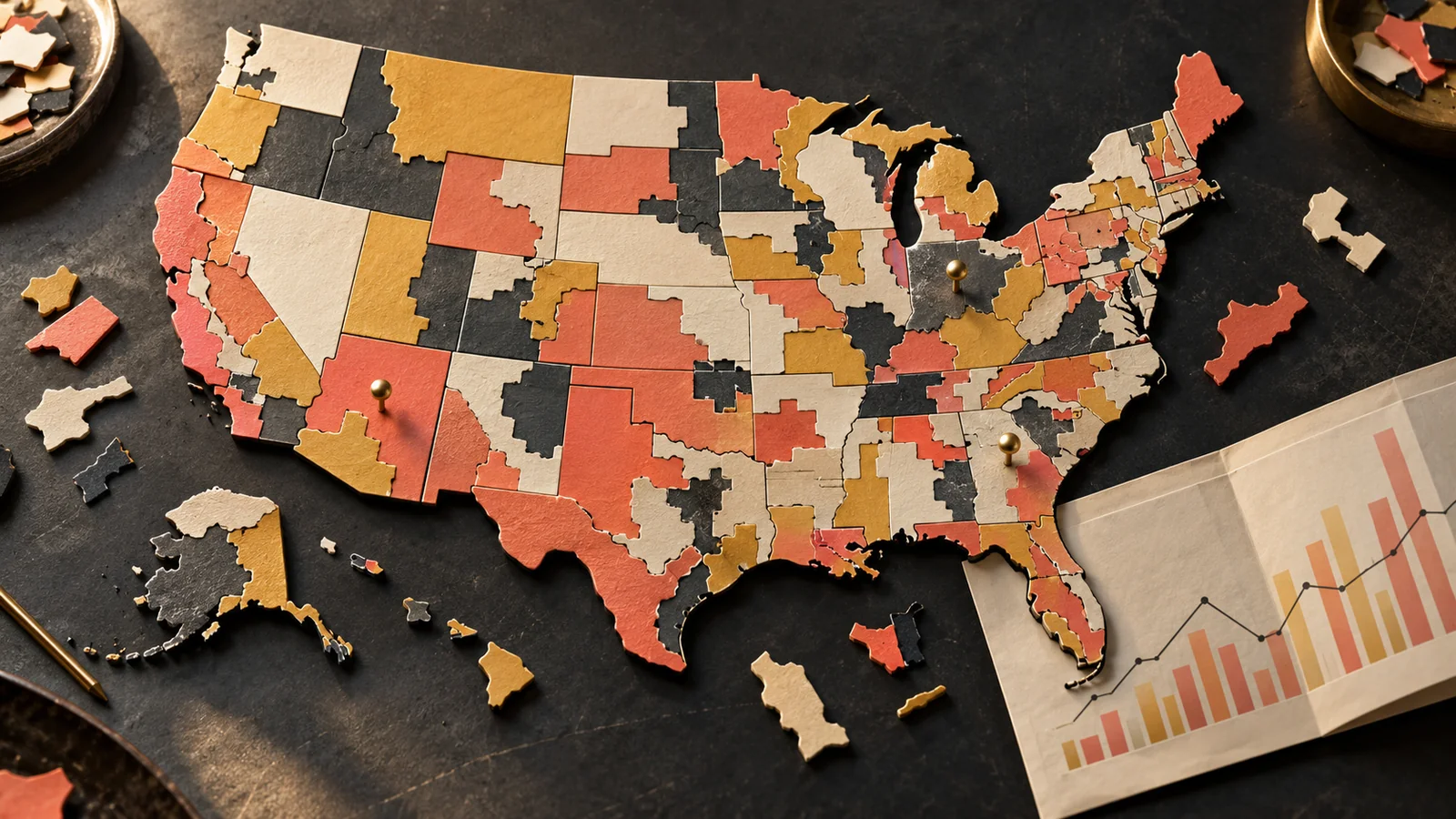
The new House battlefield starts with an old Harris result
A national guide to the most consequential 2026 U.S. House races, published by Reuters on October 12, makes Kamala Harris's 2024 vote map part of the morning's hard political news. The clearest example is New York Republican Mike Lawler. Reuters identifies Lawler as one of only three Republicans holding districts Harris carried in 2024, alongside an open Nebraska seat and a Pennsylvania district represented by Brian Fitzpatrick. That distinction makes Harris more than a former nominee watching the midterms from the sidelines: her coalition's district-level performance is now one of the benchmarks used to identify where the House majority may turn.
The comparison is important, but it has limits. A presidential result is not a forecast for a congressional race two years later. Candidates differ, district lines can change, turnout usually falls in a midterm, and local issues can overwhelm a national pattern. Reuters reports that Lawler and Democratic challenger Cait Conley each led in different late-September polls, while Lawler held a large cash advantage. The useful news is not that a Harris-won district must elect a Democrat. It is that Republicans are defending a very narrow House majority and that a small set of places receptive to Harris in 2024 are again carrying unusual weight.
That makes today's Reuters House race guide a fresh way to read Harris's current political role. She is campaigning for Democrats while remaining undecided about 2028, but the nearer test is whether voters who supported her can be reached again for candidates whose names, biographies and local coalitions are different from hers. Our earlier coverage of Harris's national field push focused on the work of contacting voters. The new race guide adds a sharper question: which districts make that work most consequential?

A national name cannot substitute for district-level organizing
Harris's own public message has emphasized local action rather than personal speculation. A Democratic National Committee release dated October 6 says Harris joined a national get-out-the-vote call the previous day, October 5. The release quotes her urging participants to knock doors, check registration status and remember state and local contests as well as congressional races. Because the document comes from the party running the organizing effort, it is evidence of the message the DNC and Harris chose to send, not an independent measure of whether the effort is succeeding.
That distinction matters in the Lawler district and everywhere else the 2024 map is being reused as a benchmark. Harris's name can attract attention, volunteers and donors. It cannot tell a campaign which apartment buildings have changed residents, which local concern is moving undecided voters, or which supporters need help understanding an early-voting rule. Those decisions belong to campaigns and community organizations with current voter files and local knowledge. The conceptual image above represents that translation from a national coalition to neighborhood routes; it does not depict a real campaign office or an actual canvassing operation.
The Associated Press offered a complementary view on September 21, when it reported on Harris's midterm campaigning. The report described planned appearances in Michigan, Nevada and Georgia and presented those stops as both help for Democratic candidates and a test of Harris's own standing. The event calendar was current as of that publication date; it should not be read as proof that every planned appearance later occurred unchanged. Even so, the report confirms the broader fact that Harris has chosen targeted midterm involvement rather than a single national tour with a uniform message.
That targeted approach also explains why a Harris benchmark should not be confused with a Harris endorsement map. Reuters's October 12 guide covers races across Texas, North Carolina, Maine, Ohio, Iowa, Florida, Washington and Kentucky, many of which turn on redistricting, candidate quality, fundraising or local economic conditions rather than Harris's personal participation. Her 2024 vote remains a useful comparison in several districts, but the 2026 candidates still have to build their own permission to be heard.
The House map and Senate map ask different questions
Reuters published a separate Senate race guide on October 12. It says Republicans hold a 53-47 majority and that Democrats would need to flip at least two states Donald Trump carried by double digits in 2024 while protecting seats such as Georgia and the open Michigan seat. The article notes that Harris campaigned with Michigan Democratic nominee Abdul El-Sayed and that polling in that race remained competitive. Our Michigan coalition report examined why a high-profile appearance still has to connect with specific communities and issues.
The House arithmetic is different. Democrats need a net gain of four seats, according to Reuters, and redistricting has altered the terrain in several states. In a House contest, a presidential margin can be a starting point for identifying persuasion and turnout opportunities, but it cannot be carried over without adjustment. A district may include new precincts. An incumbent may have built a personal brand that runs ahead of the national party. A challenger may be better funded than previous nominees or may still lack the recognition needed to benefit from a favorable national environment.

The balance-scale illustration above is deliberately abstract. It represents the analytical task of weighing a presidential benchmark against current district evidence; it is not a photograph of an election office, a legal proceeding or vote counting. The right way to use Harris's 2024 performance is as one variable among many. Treating it as destiny would erase the very local organizing Harris has been publicly asking supporters to do.
What today's guide verifies, and what remains uncertain
Three conclusions are supported by the dated record. First, Reuters's October 12 House guide places at least one Harris-won Republican-held district, Lawler's New York seat, among the most important races of the cycle. Second, the DNC's October 6 release documents Harris using her national profile to direct attention toward voter contact and down-ballot contests. Third, independent AP reporting published September 21 describes Harris as deliberately entering selected midterm races while her longer-term plans remain unresolved.
Several larger claims remain unproven. No source cited here establishes that Harris's campaigning caused a polling move, that 2024 Harris voters will turn out at the same rate in 2026, or that a candidate she supports will win. Recent national conditions may help Democrats, but Axios reported on October 8 that Republican groups were reallocating money among unexpectedly competitive states; spending decisions can change quickly and do not themselves determine the result. Readers can review that Axios account of Republican campaign triage as context, not as a substitute for district polling and official returns.
The most defensible interpretation is narrower and more useful. Harris's 2024 map still describes where part of the Democratic coalition has recently demonstrated strength. Her 2026 activity is aimed at converting that memory into present-tense work for other candidates. Today's race guide shows the small number of districts where that conversion could matter enormously to control of the House. Whether it succeeds will be determined by current voters, local campaigns and counted ballots, not by a national surname or an early poll.
A note from KHive Next
KHive Next is an independent fan community, not Kamala Harris's office, campaign, the Democratic National Committee or any candidate committee. We link to primary party material to document what Harris and Democratic organizers said, and to independent reporting to test the broader claims around it. Readers should check local election authorities for registration, voting-place and ballot information. For more community reporting, visit KHive Next news and our topic guides.