
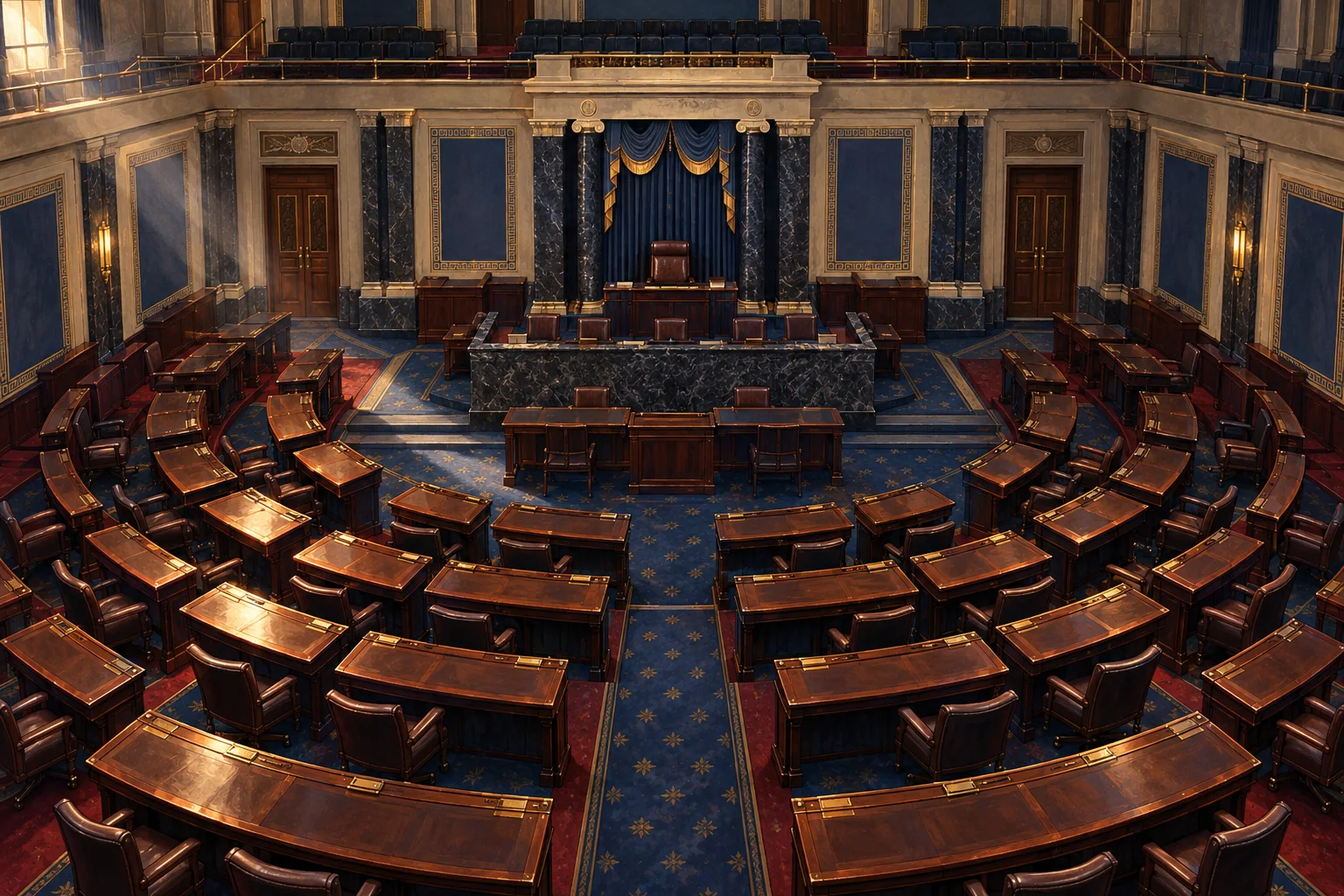
Analysis: At her September 22 appearance with Michigan Senate candidate Abdul El-Sayed, Kamala Harris described the Senate as a potential restraint on the administration. The useful question behind that campaign argument is institutional: which Senate actions can expose a problem, which can change policy, and which require agreement elsewhere?
In video and a transcript published by RealClearPolitics, Harris said, “The United States Senate should be a stopgap on the abuses of this administration.” The statement expresses her political judgment. It is not a judicial finding, and the word stopgap in that sentence should not be confused with a specific temporary funding bill.
Michigan Advance's account of the Detroit roundtable places the remarks in a discussion of Black maternal health. KHive Next's report on the completed visit covers the event. This analysis examines the machinery behind the Senate argument, without forecasting the election or endorsing a candidate.
Oversight can establish a record
The Senate's official account of its investigative power describes investigations as an established part of its legislative responsibilities. Information gathering allows Congress to examine administration conduct and inform legislative decisions. That makes oversight a real instrument, even when a hearing does not immediately produce a new law.
Its value should be judged by the evidence it adds. A hearing might clarify who made a decision, which information was considered and what officials knew at the time. Those are different accomplishments from proving that a policy was unlawful or demonstrating that a proposed replacement would work. A serious assessment should name the accomplishment actually supported by the record.
For example, imagine a dispute over access to a health service. Useful oversight could compare an agency's explanation with published implementation dates and testimony about practical effects. That is an illustrative scenario, not a claim about an announced investigation following the Detroit visit. The important sequence is question, evidence, finding and proposed response.
A microphone can create attention before that sequence is complete. Readers should therefore ask what documents were produced, whether a disputed factual claim was resolved and what remains unanswered. The number of forceful exchanges at a hearing does not tell us whether the underlying information improved.

Legislation requires more than a Senate promise
The Constitution's text, published by the National Archives, places federal legislative power in a Congress consisting of the House and Senate. Its ordinary lawmaking process requires passage through both chambers and presentation to the president, with a separate veto-override process. It also ties withdrawals from the Treasury to appropriations made by law.
Those rules put a practical limit on a campaign promise. A senator can advocate a proposal, seek support and vote. One senator cannot, through a statement alone, create a benefit across the country or command an agency to carry out a preferred replacement policy. The strength of a proposal depends partly on its route through the other decisions it requires.
That does not make advocacy meaningless. It changes how the promise should be evaluated. A credible explanation would identify the proposed text, the necessary partners, the source of funding if relevant and the unresolved choices. Where agreement is uncertain, uncertainty belongs in the account rather than being hidden behind the language of immediate delivery.
The same discipline applies to preventing a change. Blocking a proposal and establishing a durable alternative are different outcomes. A temporary preservation of the status quo may be the stated objective; if so, it should be described that way. If the promise goes further, the reporting should ask how the additional result would follow.
Procedure changes the practical meaning of a majority
The Senate's official history of filibusters and cloture explains that the chamber adopted a three-fifths cloture threshold in 1975. For the ordinary legislative cloture rule, that means 60 senators when all 100 seats are filled. Ending debate and passing a measure are distinct procedural questions.
It follows that winning a narrow majority and being able to advance every legislative priority are not interchangeable claims. The relevant threshold depends on the question before the chamber and the procedure being used. This article does not assume that every Senate action requires 60 votes, nor that a campaign statement identifies a usable procedural route.
For readers comparing promises, the productive question is specific: which action is being proposed, and what agreement does that action require? A claim about institutional strength becomes more informative when it names the vote, the obstacle and the proposed way through it. A general pledge to fight supplies none of those details by itself.
Nominations provide another form of influence
The Senate's powers and procedures overview identifies its role in reviewing presidential appointments. This is a different channel from legislating. Evaluating a nominee can involve qualifications, management, past decisions and commitments concerning the responsibilities of the position.
A useful accountability question connects the person to the office. What decision would the nominee be responsible for? What evidence supports the concerns raised? What answer would address those concerns? Those questions are more informative than assuming that agreement or disagreement with a president settles every appointment on its merits.
The confirmation process should also be followed beyond a single exchange. A nominee's statement, an appointment decision and later performance are different records. An analysis that treats the first as proof of the last gets ahead of the evidence. Subsequent reporting can compare commitments with actions while preserving the context in which the commitments were made.

Translate the argument into observable steps
Harris's phrase becomes testable when separated into concrete expectations. If the goal is information, look for a defined inquiry and findings. If it is a change in law, look for text and legislative progress. If it concerns an appointment, look for the responsibilities, evidence and decision involved. Each expectation calls for a different record.
The evaluation should also allow for partial results. Obtaining an answer may be useful without resolving a policy disagreement. A proposal may sharpen the choices without gaining enough support to pass. A setback may reveal a constraint rather than demonstrate that the original concern was invented. Describing the actual result is more useful than forcing every development into victory or failure.
For the maternal-health discussion, this approach keeps human concerns and institutional claims connected without collapsing them. An account of difficulty accessing care can motivate scrutiny. Determining the cause and choosing a response still require evidence. Neither dismissing the concern nor declaring a solution from the campaign stage completes that work.
KHive Next's Congress and midterms explainer provides related background. The standard used here, consistent with the site's editorial policy, is to distinguish a speaker's argument from the actions and results that could substantiate it. This is an institutional reading of Harris's remarks, not evidence that a new investigation, law or appointment decision followed the Detroit event.